In October, I decided the gutters had waited long enough. The forecast promised a few dry days, the trees had delivered their annual cargo of leaves, and I pictured myself finishing the job before the weather turned. It seemed like an ideal afternoon for a quick, satisfying chore: climb up, scoop out the debris, climb down, admire the results. I had no reason to expect complications. The gutters were visible from the yard, and the leaves looked less like a problem than a modest seasonal suggestion. I was, in short, confident enough to mistake a simple plan for a complete one.
From the ground, the ladder looked perfectly manageable. Its height appeared ordinary, its feet sturdy, and its angle seemed close enough to right. I had used ladders before, which I treated as a credential rather than a reminder to check the basics. My internal voice supplied reassuring commentary: this is not a roof repair, just leaves; this should take five minutes; surely the ladder has been here longer than I have. The scene contained all the ingredients for misplaced confidence: a familiar house, a routine task, and a homeowner who had not yet reached the first rung.
Still, a ladder beside a roof edge is not merely a prop in a short autumn errand. A fall can turn a minor maintenance job into a serious injury, and stable footing, correct placement, clear surroundings, and another person nearby matter even when the gutter looks easy to reach. I knew this in the abstract; the challenge was remembering it while my confidence narrated the schedule. So this account follows not only what happened rung by rung, but also the useful precautions that should accompany ladder work. I would discover that preparation is less dramatic than improvisation, and considerably more valuable, especially on a breezy day outside.
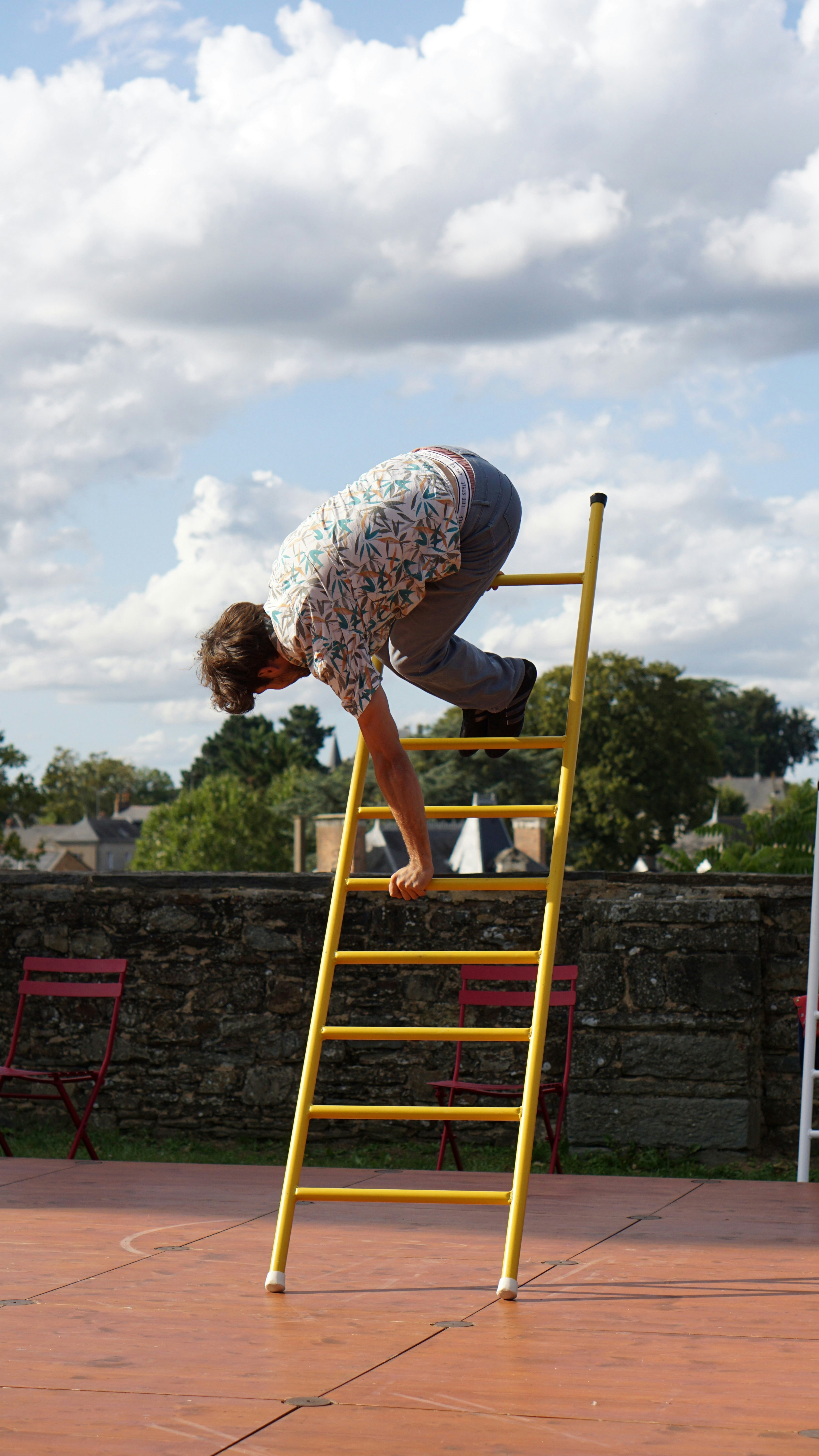
The first rung seemed almost ceremonial: a small step toward a routine chore. By the fourth, the driveway looked less like a place to stand and more like a distant landscape. My confidence, which had boarded the ladder enthusiastically, was now asking whether it could get off at the next stop. Each rung seemed to acquire legal significance. I tightened my grip, then wondered if gripping harder was helping or merely introducing new muscles to panic. The ladder gave a faint creak; my imagination supplied a courtroom, witnesses, and an explanation of how I had reached this point.
Before climbing, I checked the ladder for cracks, bent rails, loose feet, and other damage, then set it on firm, level ground. The right ladder must reach the work without requiring a stretch, and its load limit must cover the user, clothing, and tools. The manufacturer’s instructions are not decorative reading, even if the warning labels seem written by someone expecting a lawsuit. Where appropriate, secure the ladder at its top or base so it cannot shift. These precautions are easier to remember on the ground, where decisions still feel reversible.
Once on it, I kept three points of contact—two hands and a foot, or two feet and a hand—while climbing, though my hands preferred to hold on as if the ladder were a departing bus. Tools can upset balance, so I used a tool belt or hoisted items safely rather than carrying them awkwardly. I resisted leaning sideways toward the gutter. If the work was out of reach, the sensible move was to climb down and reposition the ladder, not impersonate a flag in a breeze. Having another person nearby adds a useful lookout, but does not replace careful setup. Wind, rain, or other unsafe conditions were reasons to postpone the adventure. The gutters could wait; gravity, regrettably, could not.
Reaching the gutter, I expected a few dry leaves and a quick scoop. Instead, I found damp foliage packed into a soft, dark layer, threaded with twigs, gritty sediment, and something that might once have been a seed. It felt less like tidying and more like an archaeological dig whose findings were all unpleasantly wet. My first-timer’s instinct was to keep investigating, but the useful question was whether rainwater could travel freely toward the downspout.
Wearing gloves and eye protection, I removed debris in small, controlled amounts, keeping my balance and tools close rather than making sudden reaches. I worked only where I could comfortably reach from the ladder, repositioning it as needed; stretching sideways or leaning over the roof edge would turn a modest chore into an avoidable fall risk. I also checked the downspout opening for blockage and watched for signs of trouble: visible leaks, loose hangers, sagging sections, separated joints, or corrosion. A little grit was ordinary. A gutter pulling away from the house was not an invitation to improvise a repair from a ladder.
Once the debris was cleared, water should be able to move through the gutter and toward the downspout without pooling or spilling over. A persistent overflow can indicate a clog, poor drainage, or a damaged or improperly sloped section, while a downspout that repeatedly blocks may need more than another handful of leaves removed. I learned that not every strange object deserves a closer inspection, especially when reaching it would mean an unsafe position. If clogs recur, damage is substantial, or the gutters are difficult to access, it is sensible to arrange repairs or call a qualified professional. My expedition had produced no ancient treasure, only wet gloves and a clearer view of the gutter’s condition. That was enough: the goal was safe drainage, not proving I could conquer every rung alone.
When the last clump of leaves slid into the bucket, I expected triumph. Instead, I looked at the ladder and felt a newfound respect for gravity, which had been patiently waiting beneath me the entire time. The gutters were clear, but so was my understanding: a ladder is not a casual accessory, and a damp leaf can turn an ordinary chore into an unexpectedly serious balancing act. I climbed down slowly, put both feet on level ground, and decided that finishing the job is never worth ignoring a warning sign, a wobble, or a change in the weather.
From now on, my seasonal routine will include checking gutters after the heaviest leaf fall and again after significant storms. I will look for clogs, loose sections, and signs that water is not draining properly, but I will not treat every inspection as a reason to climb. If conditions are wet, windy, or otherwise unsafe, I will wait or hire a professional. Before using a ladder, I will place it on firm, level ground, secure it as directed, and keep my body centered between the rails. The moment I need to stretch too far, the task can wait; safety comes before a spotless gutter.
For homeowners buying equipment, choose a dependable ladder manufactured in the United States when available, with the right height and duty rating for the person and tools it must support. Look for non-slip feet, sturdy construction, and clear safety labeling, and verify any country-of-origin claim rather than relying on a vague product description. Pair the ladder with a compatible gutter scoop or cleaning tool that helps remove debris without overreaching, and follow the instructions for both pieces of equipment. Clean gutters are satisfying, certainly—but staying safely on the ground is an even better homeowner achievement. The leaves can wait; my relationship with gravity needs no further testing.
If you’re interested in purchasing the item you seek, please click the link for additional details: #americanachoice.
https://amzn.to/3SBN3Oy
AFFILIATE DISCLOSURE: I am an affiliate for this company, I am not a paid employee.
I may receive a commission if you click a link on this page and choose to purchase something.
You can rest assured I will only share things I believe in and will be valuable to you.