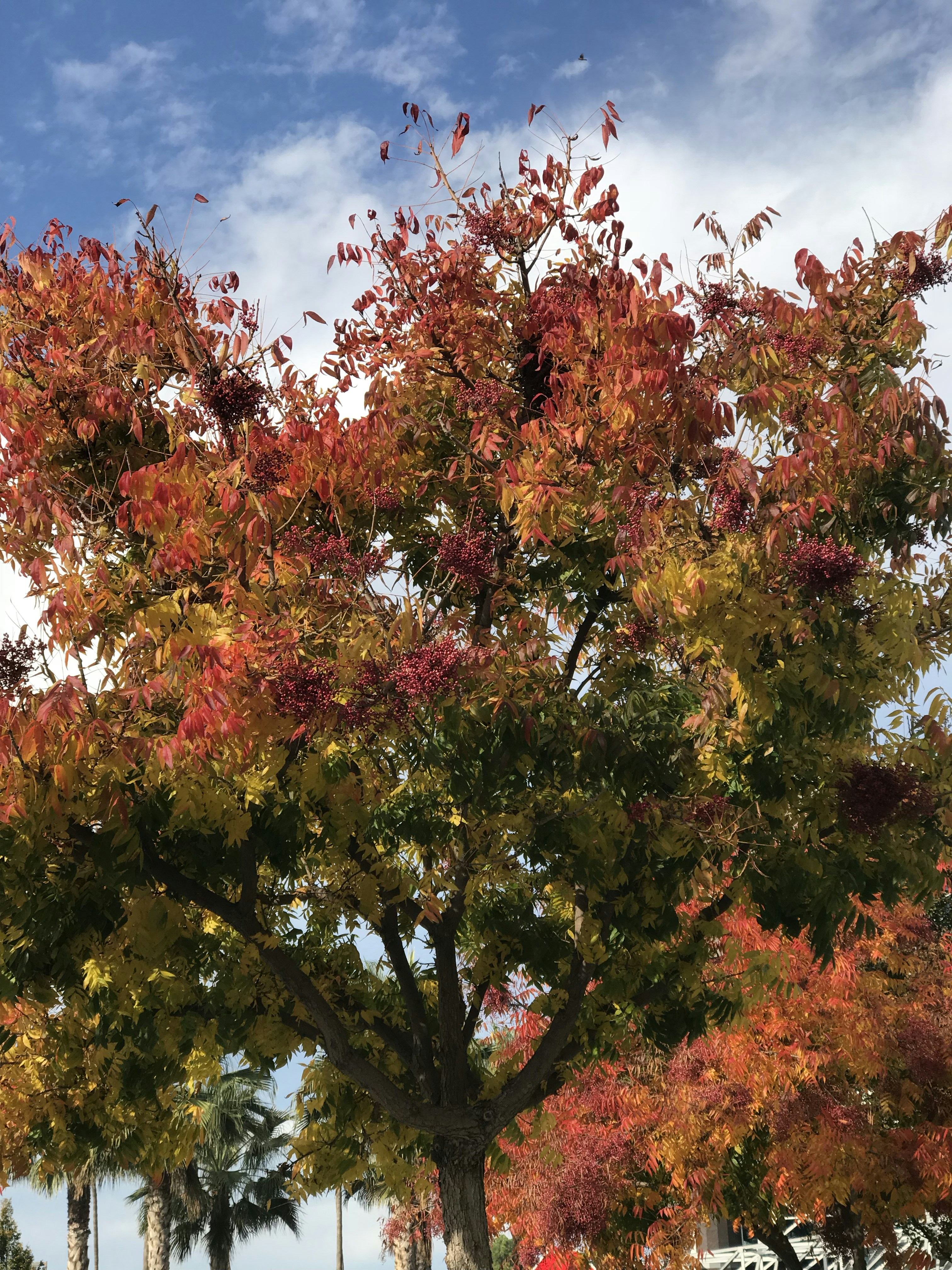
Autumn color offers Indianapolis homeowners a useful seasonal clue: trees are responding to changing conditions as winter approaches. As days grow shorter and temperatures cool, trees gradually stop producing chlorophyll, the green pigment that supports photosynthesis. As chlorophyll breaks down, yellow pigments that were already present in leaves become visible. In some species, leaves also produce red anthocyanins, creating the bright scarlet and crimson hues often associated with fall.
Maples are familiar sources of orange and red color in Indianapolis yards and streets, while oaks may turn red, bronze, or brown. Ornamental trees can add further variation, and even trees of the same species may color differently from one year to the next. The timing and intensity of autumn color depend on the tree’s species as well as seasonal weather, including temperature, sunlight, and moisture. A vivid display that arrives at the expected time and appears fairly even across the canopy is often simply part of the normal seasonal cycle.
However, leaf color alone cannot diagnose a tree or confirm that it is in perfect health. A stressed tree may still produce attractive fall foliage, while healthy trees can show muted color when weather conditions are unfavorable. Consider the whole tree instead: Is the canopy reasonably full? Did leaves change color and drop at a typical time for that species? Has growth been sparse, or are there dead branches, damaged areas on the trunk, or leaves dropping unusually early? Patterns across several seasons can provide more useful context than a single colorful display.
Some variation is expected, but unusual color or leaf loss may deserve closer attention when it appears alongside thinning growth, branch dieback, or trunk damage. These signs can indicate stress from factors such as drought, pests, disease, or root problems. Noticing them in autumn gives homeowners an opportunity to assess the tree and address concerns before winter adds further strain. The most helpful reading of fall color, then, is not a diagnosis based on orange or red leaves, but one part of a broader view of the tree’s condition.
In Indianapolis, autumn yellow is expected as daylight shortens and temperatures fall. But leaves that turn unusually early or unevenly may signal stress rather than a normal seasonal display. Concern increases when yellow foliage also has crispy brown margins, appears before neighboring trees change, or is accompanied by premature leaf drop. Color alone cannot identify a cause: several conditions affect water uptake, roots, and nutrient availability, and more than one may be present. Note when symptoms began, which parts of the canopy are affected, and whether the pattern changes from year to year.
Drought during late summer or fall can leave soil too dry for roots, while compacted soil can limit both air and water movement. Poor drainage may keep roots waterlogged, and disturbance from digging, grading, or nearby construction can damage the root zone. Problems with nutrient availability may also contribute, but yellowing does not automatically mean a tree needs fertilizer. A whole canopy changing early can point toward a broad stressor, such as prolonged drought or root-zone conditions. If yellowing is limited to one side or mostly lower branches, check for differences in sun and wind exposure, soil conditions, roots, and recent construction nearby.
Begin with low-risk checks before applying treatments. Check soil several inches below the surface; a dry layer may indicate insufficient moisture, while persistently wet soil deserves attention too. Observe whether water soaks in or runs off, and whether it pools after watering or rain. Keep mulch in a shallow ring, clear of the trunk, and avoid piling soil or other materials over roots. Do not add fertilizer simply because leaves are yellow; without a diagnosis, it may not address the cause and could create additional stress. If the pattern returns, worsens, or comes with thinning foliage and dieback, consult a certified arborist or local extension resource for an assessment.
Black spots, dark blotches, and leaves dropping before autumn is well underway can signal a problem worth investigating. In many cases, fungal or bacterial leaf diseases affect foliage more than a tree’s long-term health, especially when the tree is otherwise vigorous and has a full, healthy canopy. Still, repeated or widespread symptoms can weaken a tree over time, and early leaf loss may point to stress beyond a leaf infection. Wet weather, crowded canopies with limited airflow, and infected leaves left beneath trees can encourage some diseases. Similar-looking marks, however, may result from different diseases, insects, environmental stress, or other causes.
Observe the pattern before deciding what to do. Are spots scattered across a few leaves or widespread through the canopy? Do they have pale or yellow halos, irregular edges, or unusual shapes? Are nearby trees showing similar symptoms, or is only one tree affected? Also look for signs beyond the leaves, including dead or dying branches, thinning foliage, lesions on limbs, or changes in the trunk. Color alone cannot reliably identify a disease, so avoid naming a specific cause from a photograph or appearance. Applying pesticides without a confirmed diagnosis may be ineffective and can harm beneficial organisms.
Where leaf disease is suspected, rake up and dispose of heavily affected fallen leaves when appropriate; local waste guidance can help determine the best method. Sensible maintenance that improves airflow may help, but avoid aggressive pruning, particularly as winter approaches. Clean tools between cuts to reduce the chance of spreading pathogens. Seek a qualified tree professional if severe defoliation recurs, lesions appear on branches or the trunk, major canopy dieback develops, or symptoms occur alongside structural defects such as cracks or leaning. In Indianapolis, a professional assessment can help distinguish a manageable foliage issue from a broader concern before approaching freeze-thaw cycles and storm season put additional stress on compromised trees.
Begin with a visual inspection from a safe distance, looking for hanging or dead branches, cracked branch unions, leaning trunks, cavities, and limbs touching roofs or power lines. Check after windy weather as well, but do not stand beneath damaged limbs. Never climb trees, operate a chainsaw overhead, or approach branches near electrical wires. If a tree appears unstable or a limb threatens a structure, keep people clear and contact a qualified arborist; call the utility company about vegetation near energized lines.
Make hazardous branches and uncertain structural problems your first priority. A qualified arborist can assess risks and recommend appropriate pruning. Proper pruning preserves a tree’s natural structure and branch framework; topping, which removes large portions of the crown, can weaken trees and create future hazards. Do not attempt major cuts yourself. Use sturdy gloves, a rake, and hand pruners only for small, reachable branches that are within your experience and skill level.
Support tree health through dry autumn weather by watering when rainfall is limited, continuing until the ground freezes. Apply a moderate layer of mulch over the root area to help retain moisture and protect soil, but keep mulch away from the trunk. Avoid parking vehicles or storing heavy materials over root zones, where compacted soil can stress roots. Rake fallen leaves from paths to reduce slipping, and clear storm drains so water can flow freely during rain and snowmelt.
Before winter storms arrive, repeat the visual check and arrange professional help for concerns that cannot be safely addressed from the ground. Keep walkways clear and move vehicles away from trees with suspect limbs when possible. A seasonal leaf-color check can also prompt a broader look at yard health: noticing a warning sign early and preparing responsibly can help protect both the tree and the home through Indianapolis winter weather.
If you’re interested in purchasing the item you seek, please click the link for additional details: #americanachoice.
https://amzn.to/3SBN3Oy
AFFILIATE DISCLOSURE: I am an affiliate for this company, I am not a paid employee.
I may receive a commission if you click a link on this page and choose to purchase something.
You can rest assured I will only share things I believe in and will be valuable to you.