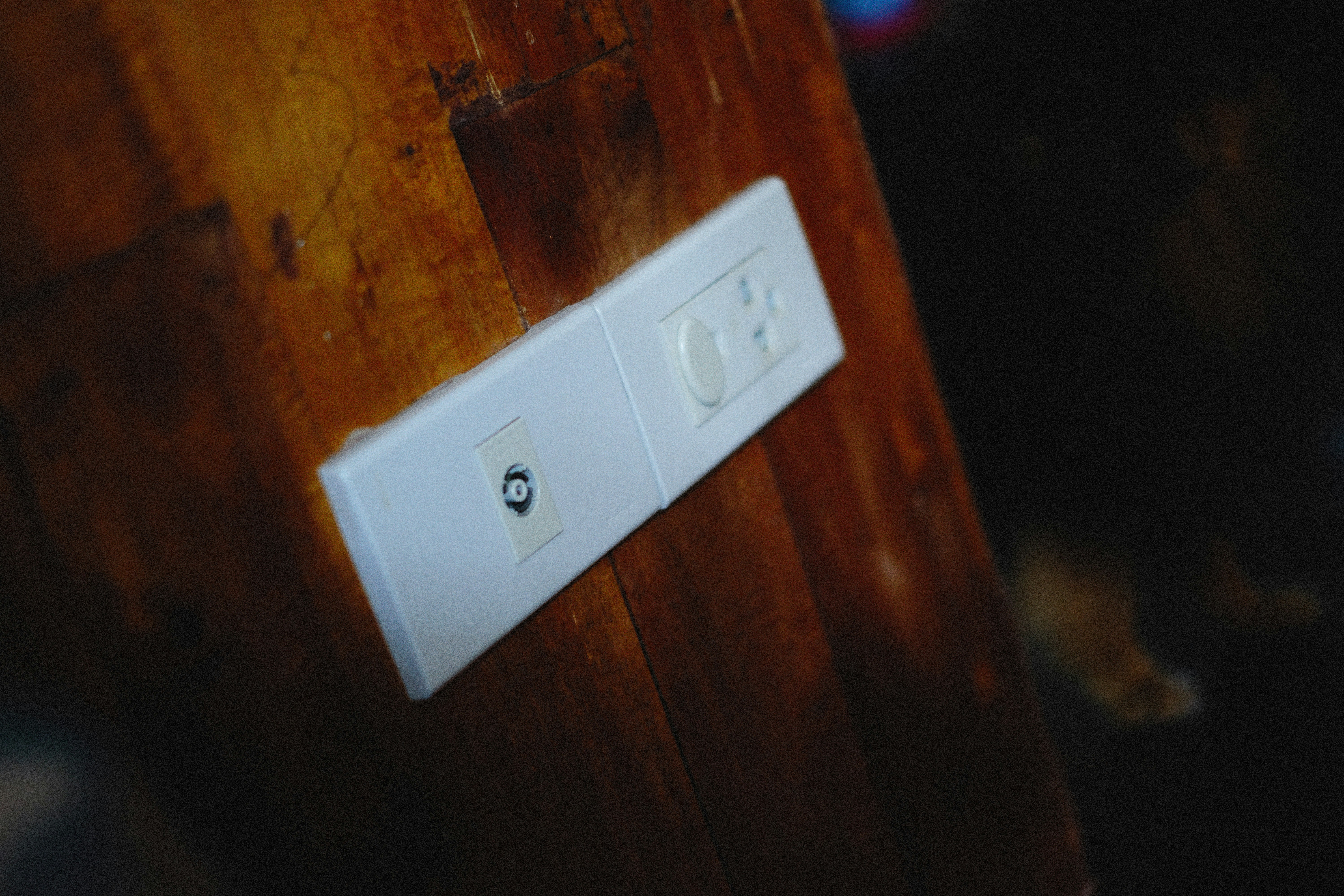
Electrical outlets and switches are small openings in a home’s air barrier. When a box is set into an exterior wall, air may move through gaps between the box and drywall, through openings around wiring, or from an unsealed cavity behind the box. The wall plate covers the opening but is not necessarily the only, or even the main, leak path. A foam gasket beneath the plate can reduce airflow at its edges; it cannot repair every gap concealed behind the device.
For older Indianapolis homes, checking these locations is a low-cost fall maintenance task that may improve comfort in rooms with noticeable drafts. It should not be treated as a guaranteed whole-home energy solution. One rough estimate suggests that outlets and switches on exterior walls may represent about 2–5% of total air infiltration in some older homes. That figure depends on the home’s age, construction, condition, and other leaks; it is context, not a universal finding or a DOE guarantee.
Start by identifying walls that face outdoors, an attached garage, or another unconditioned space such as an unfinished area. Then inspect rooms systematically, moving around each room and noting which outlets and switches sit on those walls. Include bedrooms, living areas, hallways, and lower levels where applicable. Interior partitions between conditioned rooms generally do not need gaskets for exterior-draft control, because they do not separate indoor air from outside or an unconditioned space.
Pay particular attention to plates that feel cool or let air move when the weather is windy, while taking care not to insert tools into electrical openings. Visible drafts can help prioritize the first locations to address, but their absence does not prove that a wall box is airtight. This focused check complements, rather than replaces, attention to larger sources of air leakage. Gaps around windows and doors, attic penetrations, and other substantial openings may have a greater effect and should not be confused with the smaller plate-gasket project.
Before shopping, count the receptacles and switches located on exterior walls, then note the plate style and opening layout at each location. A standard receptacle plate generally needs a gasket with openings for its outlet configuration, while toggle and rocker switches may require different shapes. Even plates that look similar can have different cutouts, so do not assume one gasket will fit every device. Compare the gasket’s shape and dimensions with the existing plate, and choose materials listed as compatible with that plate style.
Typical 2026 prices are modest: a 25-count pack of outlet gaskets costs about $4–$8, while a 10-count switch-gasket pack is around $3–$6. Package sizes vary, so use your count to estimate how many packs are needed and allow for a few extra gaskets in case of damage or an unexpected plate. For a 2,000-square-foot home, a practical materials budget may be about $14–$26, depending on how many exterior-wall plates need attention, the pack sizes available, and whether optional covers are included.
Child-safety plate covers are an optional add-on, typically about $6–$12 for a 10-pack. They may be useful where appropriate, but they are not required for air sealing and do not replace a correctly fitted foam gasket. Use covers only as directed by the manufacturer, and make sure they are suitable for the outlet and intended use. When planning the purchase, separate outlet gaskets from switch gaskets rather than buying a single type for every location. This simple check helps avoid wasted materials and makes it easier to complete the sealing work in one visit to the store. If you are uncertain about a plate’s configuration, take a photo or note its openings before selecting a pack; confirm the product dimensions and intended application on the package.
Begin with a room-by-room checklist and mark only outlets and switches on exterior walls; interior-wall plates generally do not need this draft-sealing treatment. Identify each device and the breaker that supplies it before starting. If the circuit is unclear, use a suitable tester or seek qualified help rather than guessing. Switch off the relevant breaker before removing a plate, and keep hands and tools away from wiring inside the box.
Use a flathead screwdriver to remove the faceplate screw, supporting the plate as it comes free. Lift the plate carefully without pulling on the device or disturbing wires. Place a foam gasket behind the faceplate, aligning its openings with the receptacle or switch and its screw hole with the device. The gasket belongs between the plate and the wall; it should not be pushed into the electrical box or used to cover exposed wiring.
Hold the gasket and plate in position, then reinstall the screw. Tighten it only until the plate is secure and sits flat. Overtightening can crack a plate, deform the foam, or pinch the gasket so it no longer seals evenly. If the plate will not sit flush, remove it and check alignment rather than forcing it into place.
Stop work if you find a damaged box, exposed or loose wiring, signs of heat, or any condition you cannot identify safely. A faceplate gasket is a simple draft-reduction measure, not a repair for damaged electrical components and not a substitute for code-compliant sealing around the electrical box. Have electrical concerns assessed by a qualified electrician.
Allow about two to three minutes per plate, including inspection and checklist marking. A typical whole-home sweep may take roughly 90 minutes, depending on the number of exterior-wall devices, furniture, and access. Move through one room at a time, recording each completed outlet or switch and noting anything that needs follow-up. This repeatable approach helps prevent missed locations without removing unnecessary interior plates.
Assessing the result takes only a few minutes, but choose conditions that make a small change easier to notice. On a cool, windy day, carefully feel around the edges of each sealed outlet or switch plate for moving air. Keep your hand clear of electrical openings, and do not remove the cover plates for this check. A light tissue held near the edge can also reveal airflow: watch for it to flutter or shift. Compare several treated plates with any untreated plates in the same room, if available.
Before the work, you can make the same observations and note which locations feel drafty. After sealing, repeat the check under similar conditions. Pay attention to comfort in the room as well, while recognizing that warmth, air movement, and comfort can be difficult to judge consistently. Record the date, outdoor weather, approximate wind conditions, number of plates sealed, and any changes you notice. These notes help distinguish a repeatable improvement from differences caused by changing conditions.
The direct energy savings vary from home to home. The effect depends on factors such as the building’s age, air pressure, insulation, HVAC use, and the size of the gaps that were present. Estimates that electrical penetrations contribute a certain share of air leakage—sometimes described as 2–5%—do not mean that sealing them will reduce total energy use by the same percentage. Nor can a specific reduction in utility bills be promised; the result may be modest, especially where the original gaps were small.
For a broader check, compare utility use across periods with similar outdoor temperatures, ideally while keeping thermostat settings and household routines as consistent as possible. Weather swings, heating or cooling schedules, and other changes can easily obscure a small effect. If noticeable drafts remain, investigate larger leakage sources, such as doors, windows, attic openings, or plumbing penetrations, and consider a qualified energy assessment. Outlet and switch gaskets are still an inexpensive, quick fall-preparation improvement, but they are only one part of managing a home’s air leakage.
If you’re interested in purchasing the item you seek, please click the link for additional details: #americanachoice.
https://amzn.to/3SBN3Oy
AFFILIATE DISCLOSURE: I am an affiliate for this company, I am not a paid employee.
I may receive a commission if you click a link on this page and choose to purchase something.
You can rest assured I will only share things I believe in and will be valuable to you.